
QIC Global and Bluewolf are the same company.

The Top 10 Reasons Why is ISO 14001 Important for Running a Business

Are you planning to improve your business process and get more customers for your brand? Well, there are many ways to do so. You can provide lots of discounts and loyalty points to attract more customers to your brand. Promoting your brand through social media also works. However, have you ever thought of obtaining an ISO 14001 certification? ISO 14001 is a globally known standard for EMS (Environmental Management Systems). Implementing ISO 14001 in the business process shows that your brand cares for the planet and reduces the environmental impact of your brand. But why ISO 14001 is important for running a business?

The amount of interest in the ISO 14001 standard and EMS certifications continues to grow over time. And why shouldn’t it? The ISO 14001 standard provides a set of frameworks for organizations to implement sustainable practices and maintain them properly. Every business owner knows about sustainable practices not only because they’re a good thing but also because they can contribute to their brand reputation, employee engagement, and ultimately, to your business sales. Yes, that’s right! If implemented correctly, the ISO 14001 standard can improve your overall business process and improve your bottom-line numbers.

Do you want to know more about implementing the ISO 14001 standard in your business process? Let’s dive into the following blog post to learn more about the importance of obtaining the latest ISO 14001 certification for running a business.

How can getting your organization ISO 14001 certified help you with running your business?

Most businesses wonder whether getting their organizations ISO 14001 certified is necessary or not.

Well, obtaining an ISO 14001 certification isn’t a compulsory requirement to run a business in any country. However, ISO 14001 in place can help your organization in numerous ways.

The following are the top 10 of them:

1. Improving resource efficiency

Implementing the ISO 14001 standard in your business process can encourage your organization to reduce the consumption of resources such as water and energy.

It, on the other hand, can help you save lots of money and reduce your brand’s carbon footprint.

Part of it can also ensure that your organization has an efficient system to manage the EMS in one place so people can use it.

2. Enhancing brand reputation

Getting your organization ISO 14001 certified demonstrates that you commit to sustainability.

Hence, it enhances your brand reputation among your customers, employees, and stakeholders.

Alongside that, maintaining a more environmental approach, including lowering your noise levels, pollution, and resource consumption can also improve your relationship with your neighboring companies or office buildings.

3. Lowering the environmental impact

One of the most important reasons to invest in the ISO 14001 certification is that it can help your organization reduce its environmental impacts by identifying areas for emissions and waste and creating rigorous plans to minimize or mitigate them.

Tracing the CO2 impact of your organization by recording how often you use them.

You can do it just by recording the run hours of the pump or other equipment(s) and the km your business’s delivery truck has traveled during business hours.

It can help you understand the CO2 impact on your business and focus on the energy reduction program, which can further improve your bottom line.

4. Increasing employee engagement

Do you know that by reducing your organization’s environmental impacts, you also are allowing your team to research more environment-friendly options and activities?

Well, it, on the other hand, can increase your employee engagement.

Involving your employees in the implementation and management of the ISO 14001 standard can also increase their motivation and make your work environment look more positive.

5. Reducing waste production and increasing business efficiency

Implementing ISO 14001 in your process can help you identify areas of business inefficiencies and waste.

It, on the other hand, can help you streamline the procedures, improve overall efficiency, and reduce costs.

6. Gaining a competitive advantage over your competitors

ISO 14001 certified organizations can differentiate themselves from organizations that aren’t ISO 14001 certified.

It can help you gain a competitive advantage over your competitors and help you attract potential customers to increase sales.

Getting ISO 14001 certified may not allow you to charge more, but it can definitely help you land more projects, especially with government agencies and international customers.

7. Ensuring continual improvement

One of the major ISO 14001 requirements for organizations is to monitor their EMS performance and improve it continuously.

Doing so can help your company ensure that you’re always striving for efficiency and sustainability.

8. Complying with the latest environmental regulations

Implementing ISO 14001 in your organization can help you ensure that your procedures comply with the latest environmental regulations, which, on the other hand, can reduce your chances of getting penalties and fines.

You can use numerous tools to do so by listing the EMS requirements for your business, recording the environmental incidents (if any) and how you managed them, and understanding the potential EMS risks and procedures to avoid or mitigate them.

9. Identifying and addressing potential EMS risks beforehand

Having ISO 14001 in place can help you identify, address, and mitigate potential environmental risks.

It can further help you reduce the likelihood of various environmental incidents that could affect your business reputation negatively and result in expensive penalties.

Identifying these risks before they occur can help you develop rigorous plans to minimize or rid them, so you don’t have to go through any sort of expensive dangers.

10. Improving the supply chain management

Lastly, implementing ISO 14001 in your business process can help you manage your supply chain more effectively.

It can further help you ensure that all your business partners and suppliers are also committed to practicing sustainability alongside your organization.

It, on the other hand, can increase your customer satisfaction rate and increase your bottom-line numbers.

How to find the right third-party ISO 14001 specialists for your organization?

The ISO 14001 certification has become a common ISO certification for organizations.

So, you’ll find numerous third-party ISO 14001 auditing firms nationwide.

However, not all of them are the same.

Hence, you must check a few points before hiring someone.

Consider the following factors when looking for one:

• Expertise and reputation of the third-party ISO 14001 auditing team.

• Understanding of the ISO 14001 standard and its implementation.

• Knowledge of the latest ISO 14001 requirements and guidelines.

• Client testimonials and portfolio on ISO 14001 implementation.

• Estimated budget and timeline for the ISO 14001 certification process.

• ISO certifications and qualifications of the third-party ISO 14001 auditors.

Take away

Are you wondering what would be the best way to improve your business process and gain more customers? Offering loyalty points and numerous discounts will indeed work, but they can’t bring any long-term benefits, while implementing the latest ISO 14001 standard in your business would be an excellent way to bring those benefits. We hope this blog post can help you understand why is ISO 14001 important for running a business.
What is the ISO 37001 Standard and How Does It Work in Your Organization?

Corruption and bribery have become some of the most common problems in the business world these days. Besides hindering employee productivity, workplace bribery incidents can also be the reason behind the failure of a brand. However, obtaining an ISO 37001 certification may help you. But what is the ISO 37001 standard? Well, the ISO 37001 standard is globally recognized for ABMS (Anti-Bribery Management Systems). Implementing this ISO standard in your organization shows that you take serious measures to keep your company away from corruption and bribery-related matters.

The ISO 37001 standard outlines several processes and policies on anti-bribery for organizations to help them detect and avoid workplace bribery as well as deal with it when takes place. Besides that, it also defines the steps companies should take to prevent workplace bribery while checking and addressing any instances of the practices.

The ISO 37001 criteria validate that a business has taken proper bribery prevention procedures, including training, financial & commercial controls, top-level leadership, bribery risk assessment, investigation, the sufficiency of due diligence, audit, and reporting.

Obtaining an ISO 37001 certification comes with a set of standards that organizations must follow for managing their anti-bribery systems and keeping corruption away.

Let’s dive into the blog to learn more about ISO 37001 and how it works in organizations.

What is the importance of ISO 37001 certification for ABMS?

They are as follows:

1. Achieving an ISO 37001 certification helps organizations ensure transparency by keeping all stakeholders informed of your organization’s stand on bribery and ethical business practices.

2. Implementing the ISO 37001 standard in the business promotes ethical business practices.

3. Obtaining an ISO 37001 certification helps organizations to sustain and take action against workplace bribery and corruption to protect the business from losing customers and goodwill.

4. The ISO 37001 certification acts as a hallmark of trust and quality services by making your organization comply with the legal regulations. ISO 37001-certified companies show more reliability and trust with potential customers and business partners.

5. Organizations pursuing an ISO 37001 ABMS certification refuse to pay any bribes and thus, save money by not dealing with expensive courses.

6. Having ISO 37001 in place provides a framework to identify, control, and address potential threats that can affect the company’s reputation for an effective and efficient ISO 37001 ABMS.

What are the principles of the ISO 37001 certification?

They are as follows:

1. Process Approach to understand and execute activities to increase delivery efficiency by understanding the capabilities of the company and determining the resource constraints before taking any action.

2. Customer Focus to improve the betterment of the customers and interested parties. It can also help companies sustain customers, ensure communication on their requirements by monitoring across the organizational levels, and increase customer base.

3. Improvement to maintain the brand’s current performance level and keep on developing it through proper training to employees and letting them know how everything happens with that track besides reviewing and audit planning, recognition and acknowledgment, and implementation, which can lead to improved process performance.

4. Leadership achieves quality objectives by establishing a unity of purpose that aligns their policies, resources, strategies, and procedures. It will then result in better coordination of your organization’s processes to develop a culture of integrity and trust, providing staff(s) with the required training, resources, and authority to act with accountability.

5. Relationship Management to achieve a well-managed supply chain by managing relations with relevant interested parties, including the providers. It won’t only provide you with a stable flow of products and services but also decide the relationship with the interested parties.

6. People Engagement to involve people efficiency across all levels by communicating with your staff(s) about their needs within the organization, recognizing people’s contributions, learning, and improvement, and sharing knowledge and experience.

7. Evidence-Based Decision-Making to make decisions by evaluating data and learning from previous mistakes to bring better efficient solutions.

How to find the right third-party ISO 37001 experts for your organization?

There are many third-party ISO auditing firms nationwide.

However, they are not the same, even though they offer similar services across the country.

Then how can you find the right one to implement ISO 37001 in your organization?

Well, consider the following factors when you are looking for a third-party ISO 37001 auditor:

1. Check the expertise and reputation of the team beforehand.

2. Ask the team about their understanding of the ISO 37001 standard.

3. Test the knowledge of the team on the latest ISO 37001 requirements and guidelines.

4. Ask about the estimated cost and timeline for the ISO 37001 implementation process.

5. Look for client testimonials and portfolios on the ISO 37001 certification process.

6. Check the ISO certifications of the third-party ISO 37001 auditing firm.

7. Ensure that the third-party ISO 37001 auditors are educated with valid certificates.

Take away

Bribery has become one of the biggest challenges in the world these days. Hence, implementing the ISO 37001 standard has become a necessary practice for organizations. We hope this blog can help you understand what is the ISO 37001 standard and how it works in organizations.

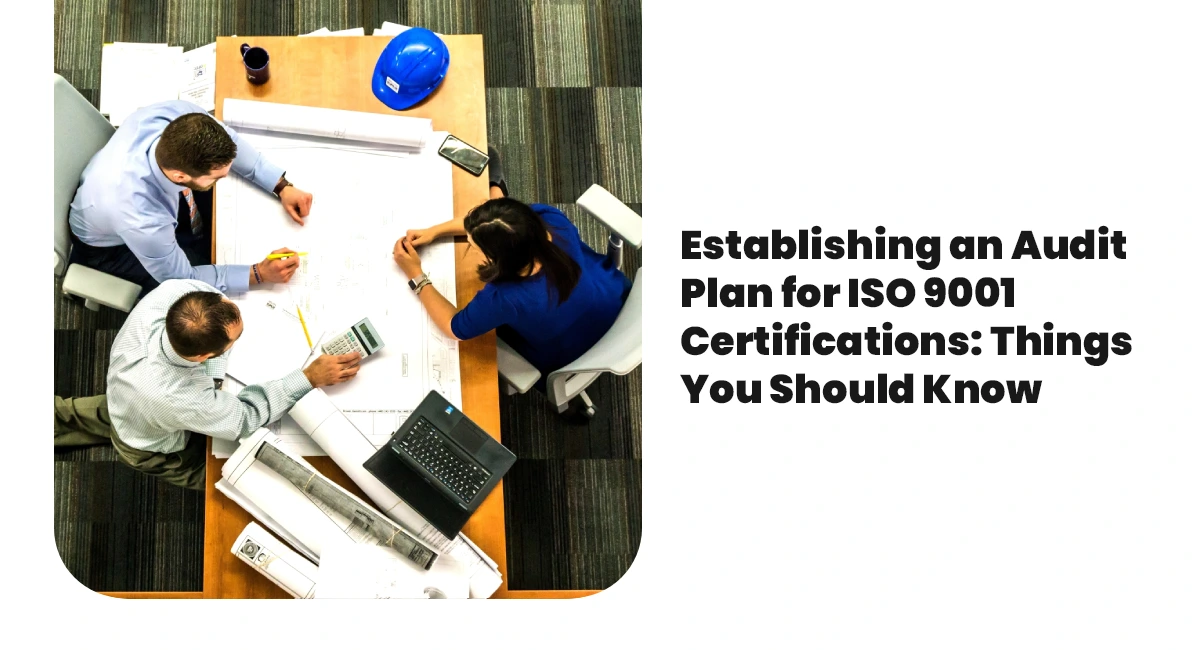
Establishing an Audit Plan for ISO 9001 Certifications: Things You Should Know

Are you planning to improve the quality of your business process? Well, achieving the latest ISO 9001 certification can help you with it. ISO 9001 is an internationally recognized standard for QMS (Quality Management Systems). Implementing this ISO standard in your business process shows that all the products and services you offer are safe and high-quality, meeting customer demands. But to pass the ISO 9001 audit process, you’ll need a third-party auditing team to help you with the audit plan for ISO 9001.

Want more info about it? Let’s dive into the below blog post to learn more about ISO 9001 audit plans.

What is the ISO 9001 audit plan?

The ISO 9001 audit plan is a document that outlines the resources, timing, and scopes needed for the audit process.

Alongside that, the document also defines the activities that need to be completed as a part of the ISO 9001 audit process.

One can build the audit plan from scratch. But you can also create one by adapting the existing strategy of another similar company.

This audit plan for ISO 9001 standards can help you verify if all the systems of your organization are up-to-date and comply with all the ISO 9001 requirements or not.

The ISO 9001 audit plan of your business must be developed with input from all the organizational stakeholders including the auditors, stakeholders, management, and other staff(s) who might be involved in the ISO 9001 audit process.

Why develop an audit plan to implement the ISO 9001 standard in your business?

An ISO 9001 audit plan is a crucial document to implement the ISO quality management standard in your business process.

It acts as a systematic approach to examine if the organization complies with the latest regulatory QMS requirements.

Developing an audit plan to implement the ISO 9001 standard in your business also comes with the following benefits:

1.It can help you lower the number of errors because of a better audit process and potential QMS threats with prior identification.

2.Having an ISO 9001 audit plan can help you prevent misunderstandings with employees or customers by establishing clear expectations of what will take place during the ISO 9001 audit process.

3.The management can use the ISO 9001 audit plan as a benchmark to assess vulnerabilities and risks of the organizational processes. The audit plan can also provide an overview of the level of risks your organization is dealing with. It can also help your ISO 9001 auditors check if you’re applying the appropriate controls to minimize the potential QMS risks.

4.It also minimizes the time spent on reading documents during the ISO 9001 audit process by clarifying the audit process to everyone involved in the ISO 9001:2015 audit process.

5.Having an audit plan for the ISO 9001 certification can help you boost organizational productivity by streamlining the processes in the audit plan.

6.It can also help you organize the ISO 9001 QMS audit process in a well-defined manner by defining the scope of the ISO 9001 audit process alongside who’ll do the audit, what’ll be audited, and how long it’ll take to complete the audit process. Preparing these before starting the ISO 9001 audit process can confirm that all aspects of the audit processes are planned for and well taken care of.

Should you DIY your company’s ISO 9001 audit plan or outsource it?

There are a lot of reasons why hiring professionals for developing the ISO 9001 audit plan may be ideal for you.

While some companies also consider doing it themselves.

Here are some considerations:

1.Domain knowledge:

Most organizations opt for one of the internal staff(s) to conduct the ISO 9001 audit process, as they will have both the understanding of organization procedures and the domain knowledge.

Alongside that, internal employees would also feel more passionate about planning the ISO 9001 audit plan with their understanding of the business.

However, the audit insights would be biased to the organization and missing loopholes, even if there are any.

Well, hiring a third-party auditor can help you develop the ISO 9001 audit plan and prevent these from happening.

2.Quality:

Having any of your internal staff(s) develop the ISO 9001 audit plan can look and feel easy because of their understanding of the business.

However, hiring a professional third-party auditing team to plan the ISO 9001 audit can help you conduct various types of audits, which can further lead to better decision-making to achieve higher-quality audit standards.

3.Costs:

Costs are a significant factor in most companies thinking of having internal staff(s) to develop the ISO 9001 plan.

But no employees are permanent in an organization. Thus, spending money to train them would be a waste, while hiring a professional third-party ISO 9001 auditing team can offer you discounts for long-term contracts.

Also, ISO 9001 audit planning should be a contract-basis task rather than a regular basis task.

Hence, outsourcing your ISO 9001:2015 auditing tasks to a professional third-party ISO 9001 audit specialist would be more beneficial than doing it yourself.

Bottom line

Are you planning to get your company ISO 9001 certified? Before you start preparing your brand, develop an audit plan for ISO 9001 certifications. We hope this blog post can help you understand that.


ISO 9001 for Small Businesses – How Can It Help Your Small Interior Design Firm?

Most people tend to think that ISO 9001 certification is only required by large companies. If you’re also one of them, then let us tell you that any company regardless of their size can benefit from ISO 9001:2015. Even if you run a small interior design firm across an alley, utilizing ISO 9001 for small businesses can help you in many ways.

ISO 9001:2015 is the internationally recognized standard for QMS (Quality Management Systems). Implementing this ISO standard in your organization shows that you’re committed to the quality of your procedures and continual improvement. Aside from that, getting your company ISO 9001 certified can also help you enhance customer satisfaction while reducing costs and improving the company’s productivity.

But how can obtaining an ISO 9001 certification help your small interior design firm? Let’s discuss that in the following blog post.

Why should you consider getting your small interior design firm ISO 9001 certified?

As per data, there’re over 1 million organizations in over 171 countries across the world certified to ISO 9001:2015 QMS standard.

It comes with a strong customer focus, implication of top management, motivation, the process approach, and continuous improvement.

As an owner of a small interior design firm, getting your organization ISO 9001 certified can help you in many ways, including the following:

1.Making your organizational processes more structured:

One of the main benefits of implementing ISO 9001 in your small business is that it can offer your business operations a solid structure to enhance the effectiveness of the way your interior design firm works.

It can also help you make the system robust to teach innovative techniques to senior management and increase employee productivity by emphasizing good leadership, engagement, and relationships across the board.

2.Transforming your business procedures to be more cost-effective:

Implementing ISO 9001 in your small business model can help you improve the quality of the products and services you offer. And, doing so can help you cut down the costs as well as increase the profit margins to satisfy your customers and secure new deals.

3.Minimizing potential QMS risks in your interior design firm:

Nothing can be more devastating than QMS risks and dangerous slip-ups for small businesses, as they tend to have more to lose than larger enterprises.

Well, implementing ISO 9001 in your small interior design firm can help you identify the potential risks unique to your business through various risk assessments using risk-based thinking.

4.Improving your supply chain and maintaining a better relationship:

Getting your organization ISO 9001 certified isn’t only about employees but also making the best of your supply chain. And you can do that through regular surveys and feedback.

It, on the other hand, shows that you and all the people you work with comply with the latest ISO 9001 regulations to improve your industry and relationship with all the suppliers and vendors.

5.Offering your organization a competitive edge:

Being ISO 9001 certified can act as an international mark of quality on the name of your interior design firm, showcasing that you’re committed to best practice QMS and continual improvement.

It can give opportunities for your small interior design business to prove that industry leaders can come in all shapes and sizes.

6.Increasing the customer satisfaction level:

One of the basic goals for ISO 9001 QMS is improving the quality of products and services that can further go to your customers. It can further offer a positive impact and a good reputation for the brand.

Alongside that, ISO 9001:2015 focuses on continual improvement by continuously improving the products, processes, and procedures, which, on the other hand, can boost the customer satisfaction level directly.

7.Guaranteeing quality products and services consistently:

Implementing ISO 9001 standards in your small interior design business process can also help you bring consistency of quality to your products as well as services.

Consistency in product quality can also help you rise to higher levels and compete even with the large competitors in the interior design industry.

8.Unlocking new opportunities and achievements for your organization:

ISO 9001 is a globally recognized QMS standard. Thus, getting your small interior design firm ISO 9001 certified allows you to create valuable relationships with various international companies.

Obtaining the ISO 9001:2015 certification can furthermore open new markets, as most countries check and acknowledge the certification as a “sign of quality”.

Alongside all these, being ISO 9001 certified can also boost your business reputation, which can further help you improve customer experience and retain existing customers for your business.

Bottom line

ISO 9001:2015 is an internationally recognized standard for QMS but often misunderstood that only large companies can benefit from it. But, let us tell you that it isn’t true. If you think that ISO 9001 only helps large companies, then let us tell you that ISO 9001 for small businesses is equally important as well as ISO 9001 for large brands. It comes with many benefits for small businesses like interior design firms, etc. We hope this blog can help you understand that.

Things to Know About ISO 9001 Certification Cost – How Does It Vary and How to Reduce It?

ISO certifications are expensive and time-consuming, but it shouldn’t be that way. Most business owners worry about ISO 9001 certification cost and time whenever they think of getting their organizations ISO 9001 certified.

Well, you aren’t alone!

Everyone wants to get ISO certified and improve their business processes at a discounted rate. But, before you think of how to reduce the costs for ISO 9001, you must know the facts that make the costs vary between businesses.

Let’s discuss that in the following blog post.

What is ISO 9001?

ISO 9001 is an internationally recognized standard for QMS (Quality Management Systems).

Implementing this ISO standard in your business process shows that all the products and services you deliver are high-quality, meeting all your customer demands.

Alongside that, ISO 9001 also promotes a culture of continual improvement in organizations.

How does the cost for ISO 9001:2015 certification vary from company to company?

When it comes to implementing ISO 9001 in your business, you must know that the cost and time vary significantly based on various things.

The following are some of the factors that may affect the cost of your business’s ISO 9001:2015 certification:

1.The size of the organization plays a crucial role in the cost and time of implementing ISO 9001 in business processes. If your company is large, it may have more stakeholders than small companies. Hence, it’ll take more time and cost to implement and develop the QMS.

2.The scope of the products and services delivered by the company also plays a significant role in determining the time and cost of the ISO 9001:2015 certification process. The larger the scope, the longer and costlier the process will be.

3.The availability of key personnel to provide input in ISO 9001 implementation also plays a crucial role. Unavailability of them will delay the process and make it costlier.

4.Most organizations may almost be there already, while some are just getting started. Depending on this, the ISO 9001 implementation process can be expensive and prolonged.

5.The commitment of senior management of organizations is also vital behind the time and cost of the latest ISO 9001:2015 certification process. If the culture of quality and continuous improvement doesn’t come from the top, it’ll eventually delay the process and make it more expensive.

Is there any way to reduce the costs of getting your organization ISO 9001 certified?

In the above, we’ve seen how the cost and time for implementing ISO 9001 varies from company to company.

But the question remains unclear!

Can you reduce the cost of implementing the ISO 9001 standard in your business process?

Well, YES, you can.

The following are some tips to lower your business’s cost for ISO 9001 implementation:

1.Internally conduct a gap analysis:

Gap analysis is the first step to implement any management system let alone the QMS.

To do so, you can hire an ISO expert to help you. Or, you can do it internally.

If you want a cost-effective way to implement ISO 9001 QMS in your business, doing it internally would be ideal.

There are many websites where you can find the checklists for ISO 9001 requirements. Following them can help you.

2.Train your employees:

Hiring an external ISO auditing firm would be the easiest way to comply with the ISO 9001:2015 requirements and complete all your documentation.

But yes, they’d cost you a lot.

Skipping this by training your employees with the knowledge of the ISO 9001 standards can save you a lot of money.

Having an in-house team with the latest ISO 9001:2015 certification knowledge can also confirm a more sustainable ISO implementation.

3.Use existing resources of your organization:

Did you know that most organizations already have the systems and procedures they’ll need for implementing ISO 9001?

Well, it’s true.

All you’ll have to do is identify them and utilize them effectively.

It, on the other hand, will also reduce the costs for your brand’s ISO 9001 certification significantly.

4.See ISO 9001 as an improvement tool not a mere certification:

If you see the need for implementing ISO 9001:2015 in your process as a requirement, it’ll always look expensive in your eyes.

Thus, you should see it as an opportunity for improvement.

The ISO 9001 standard is engineered for businesses, regardless of the size and niche, to improve their procedures and increase their efficiency, which will further increase your sales and customer satisfaction.

5.Measure the outcomes regularly:

Lastly, measuring the outcomes of implementing ISO 9001 in your business is essential to reduce further costs associated with the certification process.

By measuring the progress, you can easily identify areas that need improvement.

It can also give you an insight into areas where you can make more cost-effective adjustments.

Conclusion

When it comes to getting organizations ISO 9001 certified, most business owners worry about the ISO 9001 certification cost and time. Many assume that the ISO certification process is expensive, but there are a lot of ways you can reduce the cost of implementing ISO 9001:2015 in your organization. However, the quality of work may not be as professional as it could be with ISO experts.

Making An ISO 27001 Checklist? Take A Final Look At The New Controls!

Is your organization preparing for the ISO 27001 certification? Are you on your way to make the perfect ISO 27001 stage 1 audit checklist? We can help!

Making a checklist is an effective way to keep track of your progress and ensure you don’t forget anything crucial during the demanding process. However, before making that checklist, it’ll be wise to take a final look at the new controls of ISO 27001:2022.

The recent Annex A update of ISO 27001 has left many scratching their heads.

Essentially, the update intended to simplify the implementation of controls while making them more relevant to the nature of modern-day cyber crimes. Yet, the modifications might have made things more complex for you rather than streamlining it if you have been following ISO 27001:2013.

Since the stage 1 ISO audit is about assessing documentation, clearing these doubts is critical!

Hence, in today’s blog, we present a straightforward outline of all the changes to ISO 27001 controls.

This outline will help ensure you’re indeed on the correct path and ready to jump into the ISO 27001 stage 1 audit checklist.

So, dive into the section below!

A Look At The Updated ISO 27001 Controls!

Annex A is a part of ISO 27001 that contains classified security controls. Companies are responsible for determining which of these controls apply to their organization and implementing them accordingly.

In ISO 27001, the controls take a risk-based approach associated with the Statement of Applicability.

ISO 27001:2013 contained a total of 114 controls separated into 14 categories. These controls covered a wide range of information security issues.

ISO 27001:2022 aligned the Annex A controls. It merged 24 controls and revised 58 of them. Currently, the standard has 93 controls divided into four categories, including 11 new ones.

Statement of Applicability

A must-include point in your ISO 27001 stage 1 audit checklist is the Statement of Applicability or SoA. This document outlines the Annex A control your organization has implemented.

Your auditors will refer to SoA to learn about what controls you have and have not executed at your organization.

The Updated ISO 27001:2022 Annex A Controls

The current version of ISO 27001 has 4 categories for its controls instead of 14. These categories are:

• Organizational (37 controls)

• People (8 controls)

• Physical (14 controls)

• Technological (34 controls)

Now, here’s an outline of all the current controls of ISO 27001:2022 that you might want to assess before making the ISO 27001 stage 1 audit checklist.

ISO 27001:2022, Organizational Controls

• Policies for Information Security

• Information Security Roles and Responsibilities

• Segregation of Duties

• Management Responsibilities

• Contact With Authorities

• Contact With Special Interest Groups

• Threat Intelligence

• Information Security in Project Management

• Inventory of Information and Other Associated Assets

• Acceptable Use of Information and Other Associated Assets

• Return of Assets

• Classification of Information

• Labeling of Information

• Information Transfer

• Access Control

• Identity Management

• Authentication Information

• Access Rights

• Information Security in Supplier Relationships

• Addressing Information Security Within Supplier Agreements

• Managing Information Security in the ICT Supply Chain

• Monitoring, Reviewing, and Change Management of Supplier Services

• Information Security for Use of Cloud Services

• Information Security Incident Management Planning and Preparation

• Assessment and Decision on Information Security Events

• Response to Information Security Incidents

• Learning From Information Security Incidents

• Collection of Evidence

• Information Security During Disruption

• ICT Readiness for Business Continuity

• Legal, Statutory, Regulatory and Contractual Requirements

• Intellectual Property Rights

• Protection of Records

• Privacy and Protection of PII

• Independent Review of Information Security

• Compliance With Policies, Rules, and Standards for Information Security

• Documented Operating Procedures

ISO 27001:2022, People Controls

• Screening

• Terms and Conditions of Employment

• Information Security Awareness, Education and Training

• Disciplinary Process

• Responsibilities After Termination or Change of Employment

• Confidentiality or Non-Disclosure Agreements

• Remote Working

• Information Security Event Reporting

ISO 27001:2022, Physical Controls

• Physical Security Perimeters

• Physical Entry

• Securing Offices, Rooms, and Facilities

• Physical Security Monitoring

• Protecting Against Physical and Environmental Threats

• Working In Secure Areas

• Clear Desk and Clear Screen

• Equipment Siting and Protection

• Security of Assets Off-Premises

• Storage Media

• Supporting Utilities

• Cabling Security

• Equipment Maintenance

• Secure Disposal or Reuse of Equipment

ISO 27001:2022, Technological Controls

It is the lengthiest category among the four control categories. Therefore, make it a top priority in your ISO 27001 stage 1 audit checklist.

• User Endpoint Devices

• Privileged Access Rights

• Information Access Restriction

• Access to Source Code

• Secure Authentication

• Capacity Management

• Protection Against Malware

• Management of Technical Vulnerabilities

• Configuration Management

• Information Deletion

• Data Masking

• Data Leakage Prevention

• Information Backup

• Redundancy of Information Processing Facilities

• Logging

• Monitoring Activities

• Clock Synchronization

• Use of Privileged Utility Programs

• Installation of Software on Operational Systems

• Networks Security

• Security of Network Services

• Segregation of Networks

• Web filtering

• Use of Cryptography

• Secure Development Life Cycle

• Application Security Requirements

• Secure System Architecture and Engineering Principles

• Secure Coding

• Security Testing in Development and Acceptance

• Outsourced Development

• Separation of Development, Test, and Production Environments

• Change Management

• Test Information

• Protection of Information Systems During Audit Testing

What Annex A Controls Should You Include?

Now, you are prepared to create an ISO 27001 stage 1 audit checklist and carry out a thorough assessment!

Still, if you have doubts about what controls you should execute, evaluate your company’s operations, legal requirements, business goals, and information security risks.

Do any of the above controls apply to those aspects? If yes, then you should consider executing it.

Remember, if a control does not apply to your organization, you should not feel obliged to implement it. However, during the ISO 27001 stage 1 audit, your auditor will inquire about the controls you didn’t execute. At that moment, you should be prepared to justify your decision. Hopefully, this blog will help achieve your audit goal.

14 Key Criteria You Must Meet To Pass The ISO 14001 Audit!

Is your organization on a mission to improve its sustainability efforts? Are you planning to register for ISO 14001 certification? Then, you have reached the correct place!

The ISO 14001 environmental management system standard has helped over 500,000 organizations across 180 countries implement an effective EMS till now.

The standard puts forward an easy-to-follow framework consisting of 10 clauses that act as the audit criteria in ISO 14001. To obtain the ISO 14001 certification, you shall ensure your organization adheres to all the applicable requirements and create documentation and records as evidence.

In today’s blog, we list the most critical requirements of ISO 14001 to help you understand its criteria and what you should do to obtain the certification.

So, delve into the below section now!

The Most Vital Audit Criteria In ISO 14001

ISO 14001 environmental management system standard has 10 clauses. The first three clauses describe the standard, while the rest of the seven clauses lay out its requirements.

Hence, when creating an ISO 14001 audit checklist, you shall focus on the seven requirements.

Here are the must-know audit criteria in ISO 14001.

Scope of the Environmental Management System

The scope of your environmental management system sets out the type of operations the system will cover and its boundaries.

Establishing the boundary will also help you understand which parts of your organization will come under the EMS and your ISO 14001 audit checklist. It may include processes, departments, divisions, and sites.

In most cases, EMS covers the entire organization. Yet, there are circumstances where specific requirements of the EMS may not apply to your organization or are impossible to implement in a particular department.

Environmental Policy

The environmental policy should describe your company’s responsibilities and commitments towards the EMS and other legal requirements. It should include your commitment to continually improve the environmental management system and prevent pollution.

Evaluation of Environmental Risk and Opportunity 

Audit criteria in ISO 14001 certification require you to identify the environmental risks and opportunities your organization faces and establish strategies to address them.

Although the standard does not specify a particular methodology or process for risk management, you must demonstrate that you are following a risk-based approach.

Your team should be able to explain the methodology you are using to address the risk and document evidence during the ISO 14001 audit questions and answers.

Also, the documented evidence should align with the clauses of ISO 14001.

Analysis of Environmental Aspects

Environmental aspects refer to the organizational activities that impact the environment, such as using resources like gas or water, generating waste, emitting air pollution, and disposing of effluents.

Audit criteria in ISO 14001 ask organizations to identify their environmental aspects and determine their impact on the environment. Experts suggest using a risk-scoring system to find out the significance of the aspects.

Also, you shall review and modify your environmental aspects, their impacts, and the scoring system as required.

Environmental Objectives and Plans For Achieving Them

One of the first clauses of ISO 14001 focuses on setting straightforward environmental objectives and establishing strategies to achieve them. You can use the outcome of your risk assessment to identify your company’s environmental goals and prioritize them.

Ensure the objectives are specific, measurable, attainable, relevant, and time-bound, such as reducing waste production within the next six months.

Along with the objectives, you shall determine who has ownership of each objective, how you will monitor their progress, a timeline to achieve those objectives, and the specialized equipment used in the process.

When assessing your compliance with the audit criteria of ISO 14001, auditors will check how the objectives relate to each other and your environmental policy.

Operational Control Procedures

As per the ISO 14001 EMS requirements, your organization must define and execute its operational controls based on its industry. The standard doesn’t specify how you should implement these controls. However, it’s essential to keep evidence of your operational controls to meet the audit criteria of ISO 14001.

Procedure For Emergency Preparedness And Response

Environmental emergencies are the situations within your company that influence the environment or the environmental events that impact your company.

Your emergency plan should demonstrate your ability to address both. The plan should be able to identify emergencies and address them.

Also, you should have records on testing the proceeds and providing training to relevant parties.

List of Interested Parties and Applicable Regulations

Interested parties are essentially the stakeholders your organization cannot operate without.

The audit criteria in ISO 14001 EMS want organizations to determine the needs and expectations of their interested parties. Considering them when building the EMS will help you ensure its appropriateness.

Furthermore, you shall record the requirements of all interested parties and upgrade them as necessary. Additionally, you shall determine all the environmental regulations applicable to your organization and list them.

Competence Record

Record the skills of every relevant stakeholder at your company. Also, document how you help improve their skills with training. Make sure employee training records are easily accessible.

Communication Evidence

According to the ISO 14001 audit requirements, it’s your top management’s responsibility to communicate the environmental management system to relevant stakeholders. They should be aware of your obligations and their role in the system.

Monitoring Performance

To facilitate continual improvement of the ISO 14001 environmental management system, you must establish a monitoring process to measure performance. Keeping records of these evaluations will help auditors determine your commitment to the standard.

Compliance Obligation Record

You shall obtain records of everyone working at your organization. Experts suggest performing a competence evaluation to establish legal requirements and regular reviews to keep the records up-to-date.

Internal Audit Program and Management Reviews

The internal audit criteria in ISO 14001 require you to perform planned audits to check your company’s overall environmental performance and maintain records of the audit outcomes as evidence of compliance.

Furthermore, your top management shall take the responsibility to review the EMS to maintain its effectiveness and record its outcome.

Non-Conformities and Corrective Actions

Document the non-conformities of your environmental processes and operations and the actions you took to address them. To prove the effectiveness of your corrective actions, consider performing a root cause analysis.

Final Thoughts

Not all audit criteria in ISO 14001 may apply to your organizations. However, following these 14 requirements is a must. These clauses build the foundation of ISO 14001. Complying with them will help demonstrate your commitment to the standard and achieve the ISO 14001 certification.

What Is ISO 21001 Certification? How Much Does It Cost?

Do you know that even though 91% of children attend primary education globally, most are not learning enough?

UNESCO says that over 617 million children are not learning although they attend school. Their reports also indicate that the number of students dropping out has significantly increased from 2021.

Unqualified or lack of teachers and economic issues are among the most common reasons behind this issue.

So, as an owner of an educational institute, how should you deal with this issue?

You can implement an educational organization management system, like ISO 21001. It will help you maintain structured processes throughout your organization, improving the quality of education and making students a top priority.

In today’s blog, we will look at the principles and requirements of the standard, the ISO 21001 certification cost, and other factors.

Hence, if you are looking for an effective way to manage your educational institute, keep reading!

What Is The ISO 21001 Certification?

The ISO 21001 standard offers a framework to establish an educational organization management system. Following the framework can help create and maintain transparency, inclusivity, and flexibility across your EOMS.

It will allow you to implement the best practices, provide personalized training, improve the quality of education, train educators, and take a learner-centric approach.

ISO published the standard in 2018 to help educational institutions provide high-quality services. Also, the certification promotes equitable and accessible education for learners with special needs and distance learners.

What Is The ISO 21001 Certification Cost?

Your ISO 21001 certification cost depends extensively on the size and complexity of your organization, the scope of the EOMS, and the certification body you hire. To give you an estimation, a company with around 25 employees may pay approximately 4000 USD for their ISO 21001 certification.

On the other hand, an organization with 250 employees pays maybe 12000 USD for the ISO EOMS certification. Also, the cost can vary based on your location and the time it takes to audit the EOMS.

If you want a realistic figure, speak to your nearest third-party auditor. Remember to ensure the auditor has certification and works with accredited certification bodies.

Can Your Educational Institute Apply For The ISO 21001 Certification?

The ISO 21001 standard applies to all organizations operating in the educational sector. Regardless of the size, nature, and location of the company, you can apply for the certification if you can bear the ISO 21001 certification cost.

Following are a few examples of educational institutions that can apply for the ISO 21001 certification:

• Pre-schools,

• Colleges,

• Adult education centers,

• Vocational education centers,

• Tutoring or coaching centers,

• Special education schools,

• Universities,

• Training institutes,

• K-12 schools.

Principles Of ISO 21001 Certification

The ISO 21001 EOMS certification has 11 principles, including the following.

• Focus on learners and other beneficiaries,

• Visionary leadership,

• Engagement of people,

• Process approach,

• Improvement,

• Evidence-based decisions,

• Relationship management,

• Social responsibility,

• Accessibility and equity,

• Ethical conduct in education,

• Data security and protection.

Is ISO 21001 Certification Worth It?

After seeing the ISO 21001 certification cost, you may wonder whether achieving the certification is worth it.

Well, if you consider the statistics above, ISO 21001 can be valuable for many education institutes.

The education sector across the world is facing many hurdles, from unqualified stakeholders and corrupt management to a lack of resources. About 72 million children don’t even get the chance to get an education. If you listen to experts, only six out of ten kids will finish school in 2030.

ISO 21001 can play a critical role in improving the situation.

When followed religiously, the standard can help you

• Align organizational policies with objectives and enhance the credibility and reliability of the institute,

• Execute personalized learning processes to make education more accessible,

• Promote inclusivity and meet learner’s expectations,

• Demonstrate your commitment to quality and comprehensive education,

• Harmonize legal regulations and other requirements into a single framework,

• Enhance your social responsibility.

The Requirements Of ISO 21001 Certification

Do you think the above benefits justify the ISO 21001 certification cost? If you do, here are the requirements you have to meet to comply with the ISO 21001 standards.

ISO 21001 follows the same high-level structure as ISO 9001. It contains 10 clauses, three of them being introductory.

These are the seven clauses you have to follow to achieve the certification.

Context of the organization:

Your organization shall define the internal and external issues affecting its educational organization management system. Furthermore, you should form strategies to obtain the EOMS objectives that include its purpose and social responsibilities.

Leadership: 

The top management of your company should take accountability and responsibility for maintaining the effectiveness of the EOMS. Along with helping you make a plan to cover ISO 21001 certification costs, they shall assist with integrating the management system across the company.

Planning:

You should make plans to address risks and opportunities, meet the objectives of the EOMS, and manage changes.

Support:

You will spend a significant percentage of your total ISO 21001 certification cost to meet this clause. It requires you to determine what resources are needed to implement and maintain the EOMS and gather them.

Operation: 

It is one of the lengthiest clauses of the standard. It operates with clause 6 of ISO 21001. You can use this clause to develop controls for developing and designing educational products and services, control externally provided resources, and more.

Performance evaluation: 

Your organization shall adopt methods to monitor, measure, evaluate, and analyze performance.

Improvement: 

To maintain the EOMS, your organization shall identify and address nonconformity, continual improvement, and requirements of corrective actions.

Summing Up

The benefits of the EOMS certification surely outweigh the ISO 21001 certification cost here. However, remember, that achieving ISO certification is not a one-time thing. It’s a recognition that you will have to continuously maintain, which means going through paid annual third-party audits. So, before jumping into the process, consider creating a realistic budget and consulting with multiple auditors and certification bodies to get a good deal.

Enjoy The Benefits Of ISO 27001 Certification: Avoid These 10 Errors!

With a cyber attack happening every 39 seconds on average, information security is no longer an afterthought. It’s a necessity.

Consequently, information security standards and regulations, such as ISO 27001, have become the cornerstone of building a resilient and thriving information security management system. In fact, many companies these days demand their partners to provide an information security certification to protect their operations from cyber attacks.

That said, the ISO 27001 certification benefits go beyond healthy partnerships. It can help you protect the most critical assets of your organization and avoid legal issues related to cyber crimes.

However, obtaining the ISO 27001 certification is not a walk in the park. It’s a lengthy, detailed, and demanding process that requires continuous maintenance. As a result, mistakes happen. Moreover, if you don’t take appropriate action to address those blunders, you might lose the certification.

Through today’s blog, we are here to give you an advance alert so you don’t make the same errors as others when pursuing the ISO 27001 certification.

So, let’s get started!

Terrifying Mistakes That Can Prevent You From Enjoying The ISO 27001 Certification Benefits

1.Neglecting Top Management Involvement 

Top management has critical responsibilities in developing, implementing, analyzing, and maintaining ISO 27001 certification. Their commitment, support, and role in communicating the ISO 27001 certification benefits are critical for the organization-wide success of the system.

It’s nearly impossible to comply with the ISO 27001 requirements without dedication from top management. It can lead to poor resource management, direction, authority, and ineffective implementation.

2.Overcomplicated Policies

Another grave error organizations make when pursuing ISO 27001 certification is creating complex and convoluted policies. If your ISMS policies are not comprehensible to auditors or staff, you can’t expect them to follow the rules.

Overcomplicated policies also lead to confusion, misinterpretations, misdiagnosis of security issues, and, eventually, non-compliance.

Hence, keep your ISO 27001 policies straightforward, jargon-free, and accessible to relevant parties.

3.Failing To Align Business Objectives With ISO 27001 Policies

To truly enjoy the countless ISO 27001 certification benefits, you must align the organization’s overall objectives with the ISMS policies. Failing to establish this alignment will create a disconnection between your company’s aims and priorities.

Hence, when developing the ISO 27001 policies, involve key stakeholders and utilize the policies to address business risks, objectives, and compliance requirements.

4.Neglecting the Risk Assessment

The significance of risk assessments in ISO 27001 cannot be emphasized enough. It’s the best way for you to detect the risks threatening your ISMS and address them swiftly.

Yet, many organizations neglect their risk assessment performance, leading to overlooked threats, impacts, and inefficient controls.

If you don’t want to make the same error, regularly review and update your organization’s risk assessment process.

5.Not Reviewing The Policies

A prominent ISO 27001 certification benefit is that it mandates the periodic review of policies, procedures, and processes. It encourages organizations to keep their priorities in check and constantly make improvements to their system.

The routine reviews also aid with staying relevant and compliant with applicable regulations.

However, when you neglect to review and update the ISMS policies, it appears as a red flag to third-party auditors. It can lead to major non-conformations and even legal issues.

6.Inadequate Incident Response Planning

An adequate incident response plan is critical for minimizing the impact of potential security incidents and ensuring timely response.

Still, many organizations make the mistake of poorly developing their incident response plans.

As a result, they struggle to detect, respond to, and receive security issues. Instead of repeating the same mistake, ISO 27001 experts suggest periodically testing the incident plans and improving its effectiveness.

7.Failure To Monitor And Measure The ISMS Processes And Compliance

Monitoring and measuring is one of the most significant clauses you have to meet to enjoy the ISO 27001 certification benefits. ISO 27001 requires establishing a proper process for measuring and monitoring the ISMS policies and procedures.

Naturally, if you fail to satisfy this requirement, it will become a major nonconformity.

Also, you will miss out on the gaps and flaws of your system, leading to inaccurate outcomes.

8.Ignoring Third-Party Risks

Do you know 95% of data breaches are a result of human error? Many of these incidents are caused by third-party vendors or partners.

ISO 27001 requirements specifically ask organizations to carry out third-party risk management and conduct due diligence before establishing relationships.

Failing to comply will prevent you from obtaining the ISO 27001 certification.

9.Lack Of Continual Improvement Evidence

ISO standards encourage organizations to embrace a culture of continual improvement to stay compliant and relevant.

Unfortunately, organizations often see policy executions as a one-time job. They don’t put much effort into improving the policies and recording the improvement actions. To auditors, this appears as a sign of a lack of commitment.

Hence, if you want to obtain the ISO 27001 certification seamlessly, regularly review your policies, seek feedback, and identify gaps and opportunities for improvement.

10.Noncompliance With Legal And Regulatory Requirements

When you implement the requirements of ISO 27001, you not only commit to following its 10 clauses but all the legal and regulatory requirements that apply to your organization. It may include the data protection laws of your country and contractual obligations in your industry. Not complying with these laws can lead to major nonconformities.

Concluding Thoughts

Committing any of these mistakes can cost you the ISMS certification and prevent you from enjoying the ISO 27001 certification benefits. So, take notes and ensure to involve your top management in the process, create straightforward policies, and comply with each clause of the standard carefully.

A Comprehensive Audit Checklist For ISO 13485 Clause 4!

As expert auditors with sufficient industry experience, it’s understandable when business owners get anxious before a third-party audit.

One of the most effective ways to deal with this unease and ensure you are following the correct path is creating a comprehensive ISO 13485 audit checklist and evaluating your medical device quality management system.

It can help you understand the additional requirements you have to meet, the potential room for improvements, and identify the flaws in the system.

To help you get started, we present a sample audit questionnaire or checklist for clause 4 of ISO 13485.

So, if you are seeking effective ways to evaluate your company’s environmental management system, delve into the below section now!

An Expert-Approved Audit Checklist For ISO 13485 Clause 4!

Clause 4 presents the first set of requirements of ISO 13485. It focuses on establishing a medical device QMS, documenting it and related roles and responsibilities, creating quality manuals and policies, and controlling documents as well.

Here’s an ISO 13485 audit checklist solely designed to help you ensure compliance with the Clause 4 quality management system.

So, let’s get started!

4.1 General Requirements

• Has your organization established, documented, implemented, and maintained an effective medical device quality management system? Have you improved the existing system according to the requirements of ISO 13485?

• Has your organization identified the processes required for the quality management system? Have you planned their application through your organization?

• Have you taken a risk-based approach to the control of the quality management system processes?

• Have you determined the interaction and sequence between the quality management system processes?

• What criteria and methods does your organization use to ensure the effectiveness of the control of quality management system processes and operations? Include them in your ISO 13485 audit checklist for a thorough review.

• Has your organization provided all the resources required to support the operation and monitoring of the medical device quality management system processes?

• How does your company monitor, measure, and analyze the ISO medical device quality management system processes?

• How has your company implemented the actions needed to achieve the QMS objectives and maintain its effectiveness?

• Are the processes of your medical device QMS managed according to the requirements of the ISO 13485 medical device quality management system?

• Does your organization outsource any processes that affect its products, services, or compliance? If yes, then how do you plan to control those processes?

• Where is the control of outsourced processes affecting product conformity in regard to the requirements of the ISO 13485 medical device QMS?

• Do you have a plan for validating software before using them? Include your processes for evaluating the plans in the ISO 13485 audit checklist.

4.2 Documentation Requirements

• Have you documented the statements of quality objectives and quality policy?

• Have you established a quality manual?

• Does your company have documented procedures required by ISO 13485?

• Do you have the appropriate documents to ensure effective planning, control, and operation of the organization’s processes?

• Have you considered the required records when creating the documentation?

• Are there any other documents required by laws and regulations?

• Can you show your auditors the medical file for each model of medical device, including documents with product specifications and meeting other ISO 13485 requirements?

• Does the quality manual include the scope of the QMS, including details of justification for excluding requirements that apply to your QMS?

• Where does the quality manual reference the documented procedures established for the QMS?

• Where does the quality manual contain a description of interactions between the processes of the QMS?

• Where does the QM outline the documentation structure of the quality management system?

• Have you established controls to prevent the deterioration and loss of documents as well as identify and distribute the documents? Then, be sure to include them in the ISO 13485 audit checklist!

A Few Details To Remember When Complying With ISO 13485 Clause 4!

Document control is a major feature of ISO 13485. Hence, ensure you make no mistake when complying with it. Note down these details to prevent errors when structuring the audit checklist.

Document Control Specifications In ISO 13485

• ISO 13485 recommends developing document control processes and procedures to

• Review and approve documents for appropriateness before using,

• Update and re-approve the documents as necessary,

• Identify the current revision status and changes made to the documents,

• Ensure the availability of relevant versions of the applicable documents,

• Ensure the accessibility, readability, and legibility of the documents,

• Identify and control the distribution of external origin documents,

• Prevent loss and unintended use of outdated documentation.

The Most Commonly Made Mistakes Regarding Documentation Control!

When crafting your ISO 13485 audit checklist, make sure to check on these three mistakes most organizations make when documenting control.

• Using obsolete documents or documents without prior approval or review,

• No defined controls to prevent the use of outdated documents or loss of documents,

• No procedure for tracking the revisions and changes in documentation.

Ensure to assign the ownership of key documents to named individuals to prevent their loss. Also, communicate the contents of the documents properly to your employees. Make sure they are able to answer queries from auditors.

Endnote

The extensivity of ISO 13485 can make it a challenging standard to meet. Hopefully, this ISO 13485 audit checklist will help you stimulate this process. Also, you can use this checklist to create similar lists for other clauses. Additionally, you can use it as a tool for readiness review or a pre-audit analysis.